
General elections are scheduled to be held sometime in the first half of 2014.

Finance Ministry meets market participants, wants feedback.

MCX has been struggling to raise funds with a rights issue, ending on Thursday.

Stock market benchmarks ended with losses for the third straight session on Wednesday as heightened geopolitical tensions, weak global peers and persistent foreign fund outflows unnerved investors.

Stock market regulator Sebi's board on Friday cleared significant reforms, focusing on IPO regulations, simplified entry for foreign investors, and a new framework for anchor investors in public issues.

Among Sensex firms, Hindustan Unilever dropped the most by 3.20 per cent. UltraTech Cement, Kotak Mahindra Bank, Adani Ports, Titan, HDFC Bank and Axis Bank were also among the laggards. However, Bharti Airtel, ICICI Bank, Bharat Electronics and Sun Pharma were among the gainers.

Benchmark equity indices Sensex and Nifty tumbled more than 1 per cent on Friday due to across-the-board selloff, especially in metal, IT and commodity stocks, tracking sluggish global markets.

One of the biggest ways in which recent government actions have been seen as investor-unfriendly is New Delhi's decision to unilaterally revisit almost every Bilateral Investment Treaty it has signed with other countries, says Mihir S Sharma.

Global investors say the volatility in policy and the corruption scams of the last two years cannot be erased with two days of announcements.

Ask rediffGURU and tax expert Mihir Tanna your income tax-related questions.
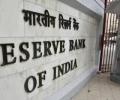
The central bank had in July last year imposed curbs such as doubling of margin requirement and a ceiling on position limits on exchange-traded currency derivatives.

Benchmark stock indices Sensex and Nifty closed higher on Thursday, helped by a rally in blue-chip Larsen & Toubro and the Economic Survey projecting the GDP growth of 6.8-7.2 per cent for the next fiscal.

Market sentiment is likely to remain cautious as investors position themselves for the upcoming Union Budget and the US Fed's interest rate decision, where expectations are muted.
Foreign investors are losing faith in Vietnam, which was sought-after destination just three-four years back. Due to slow reforms and rising corruption the growth in foreign investments has turned negative.

From the Sensex firms, Tata Steel tanked the most by 4.57 per cent. ICICI Bank, Power Grid, HCL Tech, Tech Mahindra, Infosys and Kotak Mahindra Bank were also among the laggards. Mahindra & Mahindra, State Bank of India, ITC and Bharat Electronics were among the gainers.

Stock markets closed higher for the second straight session on Tuesday, driven by gains in bank, IT and capital goods shares.

ICICI Bank, Eternal, Titan, Adani Ports, Tata Consultancy Services and UltraTech Cement were also among the laggards. However, InterGlobe Aviation, Tech Mahindra, Hindustan Unilever and Bajaj Finance were among the gainers.

The rupee declined 31 paise to settle at 90.65 against the US dollar on Friday, weighed down by geopolitical uncertainties over the US-Iran talks, and a sharp rise in global crude oil prices.

The official also advised all the trade partners to abide by the trade deals. The new 10 percent global tariff is part of Trump's protectionist trade agenda, aimed at addressing balance-of-payments issues and unfair trade practices.
.jpg)
Making a strong pitch before foreign investors at the World Economic Forum, Andhra Pradesh Chief Minister Chandrababu Naidu said the state offers great opportunities in areas ranging from technology to tourism to infrastructure to oil refineries.

From the Sensex firms, Adani Ports, NTPC, Power Grid, HCL Tech, Tata Steel, Sun Pharma, Trent and Asian Paints were among the major gainers. However, Bharat Electronics, Eternal, Mahindra & Mahindra and Maruti were among the laggards.

Mutual funds (MFs) are likely to surpass foreign portfolio investors (FPIs) in terms of anchor investments in initial public offerings (IPOs) for the second consecutive year. In calendar year 2023 so far, MFs have invested Rs 5,577 crore as anchor investors, compared to the Rs 5,417 crore invested by FPIs this year. In 2022, MFs put in Rs 9,026 crore as anchor investment, 21 per cent higher than the FPI tally of Rs 7,105 crore. This marked the first time since 2014 that MFs had outpaced FPIs in anchor investments.

Benchmark indices Sensex and Nifty ended marginally higher on Wednesday as a sharp decline in IT blue-chip stocks restricted the rally in the markets.

Investor lobbies and tax lawyers estimate the bill for international funds and banks could be as high as $8 billion

Jayshree P Upadhyay ' Mumbai September 9, 2014 Last Updated at 22:50 IST Top Stocks to Buy in 2014 8-10 Best Stocks for 2014 per month Highly Accurate Calls, Free Trial stockaxis.com/Stocks-to-buy-in-2014 Ads by Google 3 Add to My Page RELATED NEWS Foreign investor cap in bourses may be raised Sebi sets foreign portfolio investor limit of 10% per firm Sebi move on FPI regime grounded No clarity yet on FPI regime Jaimini Bhagwati: Correcting tax and disclosure anomalies Karbonn Titanium S5 Plus Be 1st to own latest Android phone with Dual SIM, 8 MP Camera & more!www.karbonnmobiles.com/S5_Plus 1Cr Life Cover @ Rs 543* Compare Premium of 46 Insurers Buy Online and save upto 55%www.policybazaar.com/TermInsur_Rate Ads by Google In a move that could increase the stake of foreign investors in Indian stock exchanges, the government is considering a threefold increase in the single-investor investment ceiling. Currently,a foreign portfolio investor (FPI) investment in an exchange is capped at five per cent. The finance ministry has written to the regulatory authorities to increase the ceiling to 15 per cent, said sources. The proposal is said to have in-principle approval from the Securities and Exchange Board of India (Sebi) and the Reserve Bank of India (RBI). The move would bring the FPI investment limit in line with those for financial institutions such as insurance companies and banks. NEW POLICY IN THE WORKS Single foreign investor limit in exchanges to be revised from 5% to 15% Sebi and RBI have given in-principle approval to the proposal Government to amend foreign investment policy BSE has 8 foreign shareholders holding 31% stake NSE has close to 20 foreign shareholders holding 36% stake The government allowed the foreign investors to invest in stock exchanges in 2006, with an overall cap of 49 per cent. This latter cap is likely to be unchanged. BSE and the National Stock Exchange (NSE), the two large nationwide bourses, are likely to benefit from the increase in limits. BSE has eight foreign investors, which cumulatively own about 31 per cent in it. The shareholding of Deutsche Boerse Group and Singapore Exchange Ltd are a little below the five per cent ceiling. NSE has about 20 foreign shareholders, holding around 36 per cent. Cyprus' Gagil and Goldman Sachs own five per cent each; Citi Group has around two per cent. "The finance ministry has received representations stating that the present limit of five per cent is a deterrent in attracting long-term anchor and strategic foreign investors in stock exchanges. Following which, the ministry has sought comments from both Sebi and RBI," said a person privy to the matter. A higher foreign investor limit will not only encourage more investment in Indian bourses but help in exchange of technology and products, said exchange officials. "A five per cent limit on the shareholding of any single investor or investor group is too small to encourage them to take sufficient interest in growth of the exchange," said an official associated with one, asking not to be named. The regulator and the government are also mulling a change in the shareholding of clearing corporations, which could also see individual foreign investors' cap being increased to 15 per cent. Some sections of the market believe that allowing a single FPI to own 15 per cent in a exchange could be detrimental to having a diversified shareholding. The Bimal Jalan committee, in the previous review of ownership and governance of stock exchanges in 2010, had debated whether there was a need to revise the cap. It was in favour of having an anchor investor, such as a bank or financial institution, which would own up to 24 per cent. Read more on: Fpi ' Sebi ' Rbi ' Nse ' Foreign Investor ' Singapore Exchange ' Finance Ministry Read More Investors vie for shares of stock exchanges Pick-up in sentiment, volumes boost bourses' unlisted shares HDFC Life Click2Protect+ Get Lump Sum + Monthly Income Benefit* @ Affordable Rate. Buy Now hdfclife.com/Click2ProtectPlus Retirement Calculator Plan Your Retirement Online in 2Min Calculate & Compare Premium Here! policybazaar.com/Retirement Ads by Google Advertisements Get a freedom to choose your own plan. Click here to know more... Data transforming the match-making business. click here Open a free Trading & Demat A/c with Sharekhan Leadership and Corporate Accountability-India. Click here Great fares to Europe from INR 54,000* Amsterdam. Click here Start Investing with the best Broker in india Important Facts about Infant Hearing Screening Gifting Solutions. Make easy & perfect! Find out what converged solutions can do for you. Smart Cloud Virtualized Server Recovery. Learn more. The perfect drive the perfect style. Book a test drive 3 Add to My Page Back to Top Quick Links Go LATEST NEWSAll NewsIn this section Ebola threatening Liberia's existence, minister warns IS threatens to assassinate Twitter employees Motherson Sumi, Eicher Motors, TVS Motor gain inclusion in F&O segment ABG, Bharati Shipyard rallies on hopes of government sops Pre-market: Five stocks to watch out for in trade today US manufacturing industry pushes India for free trade Dollar gains on Fed outlook, hurts shares Wall St ends lower as Apple shares fall post launch Ukraine ceasefire 'mostly holding': US Flipkart launches third private label Citron News you can use Rss icon Errors to avoid when filing returns What is Gratuity? What are NEFT and RTGS? Check your Income Tax Credit credit status form-26AS online Saving capital gain tax on sale of property Calculate tax on your house property income How to Check your EPF Balance & status online Featured Videos iPhone killers? The biggest threats to Apple's dominance video Jaguar takes the battle to BMW video The 5 biggest IPOs in U.S. history video Here is the next-gen spy plane... a blimp video MOST POPULARReadSharedCommented Supreme Court reserves order on coal block allocations Apple launches Watch, two iPhones & Apple Pay Guj rains: Hundreds evacuated in Vadodara, Army on stand-by Neel Mukherjee's book in Man Booker shortlist Mumbai airport keeps airlines guessing on Airbus A380 parking bay Market News A fourth of mutual fund equity assets concentrated in 10 stocks ICICI Bank, HDFC Bank, Infosys, SBI and L&T among fund managers' preferred bets Den Networks: Investing in new growth avenues Its tie-up with Snapdeal to launch a shopping TV channel looks like a win-win deal Sensex, Nifty retreat from record highs on profit taking The BSE Sensex and Nifty fell on Tuesday from their record highs in the previous session as investors chose to book profits in recent ... High agri imports under govt lens Dept of commerce seeks ideas to curb import dependence for supply of commodities, writes to sector bodies MCX hopes FTIL stake sale will conclude by month-end The exchange's clarification came in the wake of FMC rejecting its demand to allow approvals for contracts for the March quarter of 2015.

The country's primary capital markets delivered a robust performance in FY26, emerging as a global leader in initial public offerings (IPOs) despite an uncertain environment, the Economic Survey said on Thursday.

Shares of brokerage-related companies nosedived 18 per cent on Sunday after Finance Minister Nirmala Sitharaman proposed raising securities transaction tax on commodity futures to 0.05 per cent from 0.02 per cent in the Union Budget 2026-27.

After three consecutive months of heavy selling, foreign portfolio investors (FPIs) turned net buyers in the first week of February, infusing more than Rs 8,100 crore in Indian equities, aided by improving risk sentiment, along with a trade deal with the US.

Delay in the recovery in earnings has led Macquarie, Barclays and Ambit to downgrade Indian shares over the last few days.

The government allowed qualified foreign investors (QFIs) from six member-countries of the Gulf Cooperation Council (GCC) and 27 countries of the European Commission (EC) to invest in the Indian capital market to enhance foreign capital inflows.

Bharat Electronics, Power Grid, NTPC and HDFC Bank were among the other major gainers. However, Infosys, Tata Steel, Eternal and Tech Mahindra were among the laggards.

According to the committee, single overseas investments of more than 10 per cent in a company should be considered as Foreign Direct Investment while those less than 10 per cent should be classified as foreign portfolio investment.

Global risks include a potential delay in the US-India trade agreement, the possibility of a sharp correction in US equity markets, and renewed geopolitical tensions.

Inflation data, quarterly earnings and global trends will be the major driving factors for stock markets this week, analysts said. Moreover, the trading activity of foreign investors would also influence the equity market trends.

Stock market benchmark indices Sensex and Nifty surged in early trading session on Tuesday after India and the US agreed to a trade deal under which Washington will bring down the reciprocal tariff on Indian goods to 18 per cent from current 25 per cent.

SEBI has raised the investment limits for foreign investors.

From the 30-Sensex firms, Maruti, Power Grid, Tata Motors Passenger Vehicles, HDFC Bank, Asian Paints and Tata Steel were among the biggest laggards. However, Titan, HCL Tech, Tech Mahindra, Infosys and Tata Consultancy Services were among the gainers.
 © 2026 Rediff.com - Advertise with us - Disclaimer - Privacy Policy - Sitemap - Feedback - About us - Terms of use - Grievances